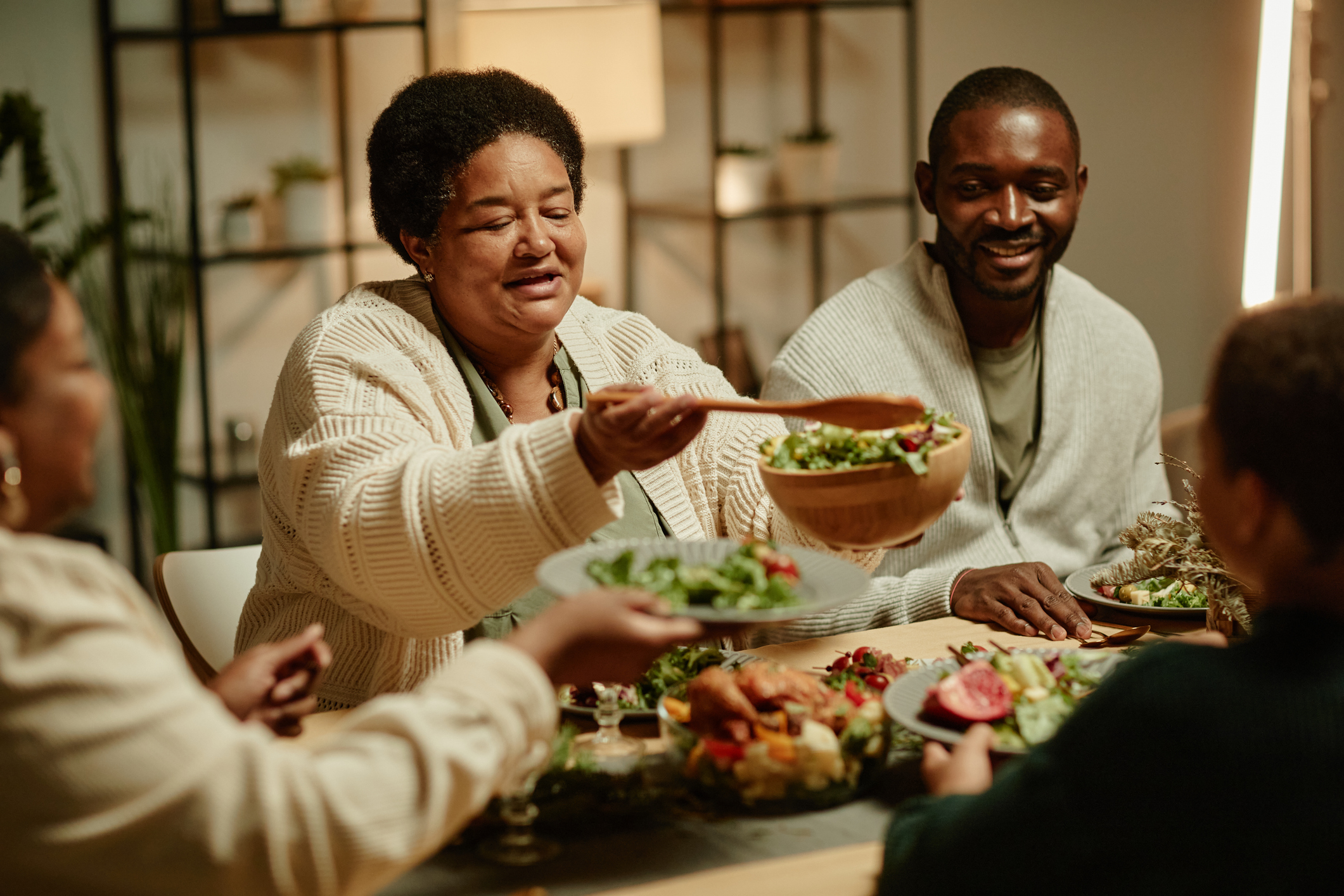
Love does not always arrive in grand gestures. Sometimes it shows up in a packed lunch. A Sunday dinner. A snack placed in your hand before you even realize you were hungry.
Across cultures, and especially within Black communities, food has long been one of the most visible and meaningful expressions of care. It is how people welcome, nurture, celebrate, and remember.
Food is often described as a love language because sharing meals and recipes strengthens emotional bonds and reinforces cultural identity. Research shows that eating together improves connection and well-being, while food traditions help preserve history and community ties across generations.

Why Food Feels Like Love
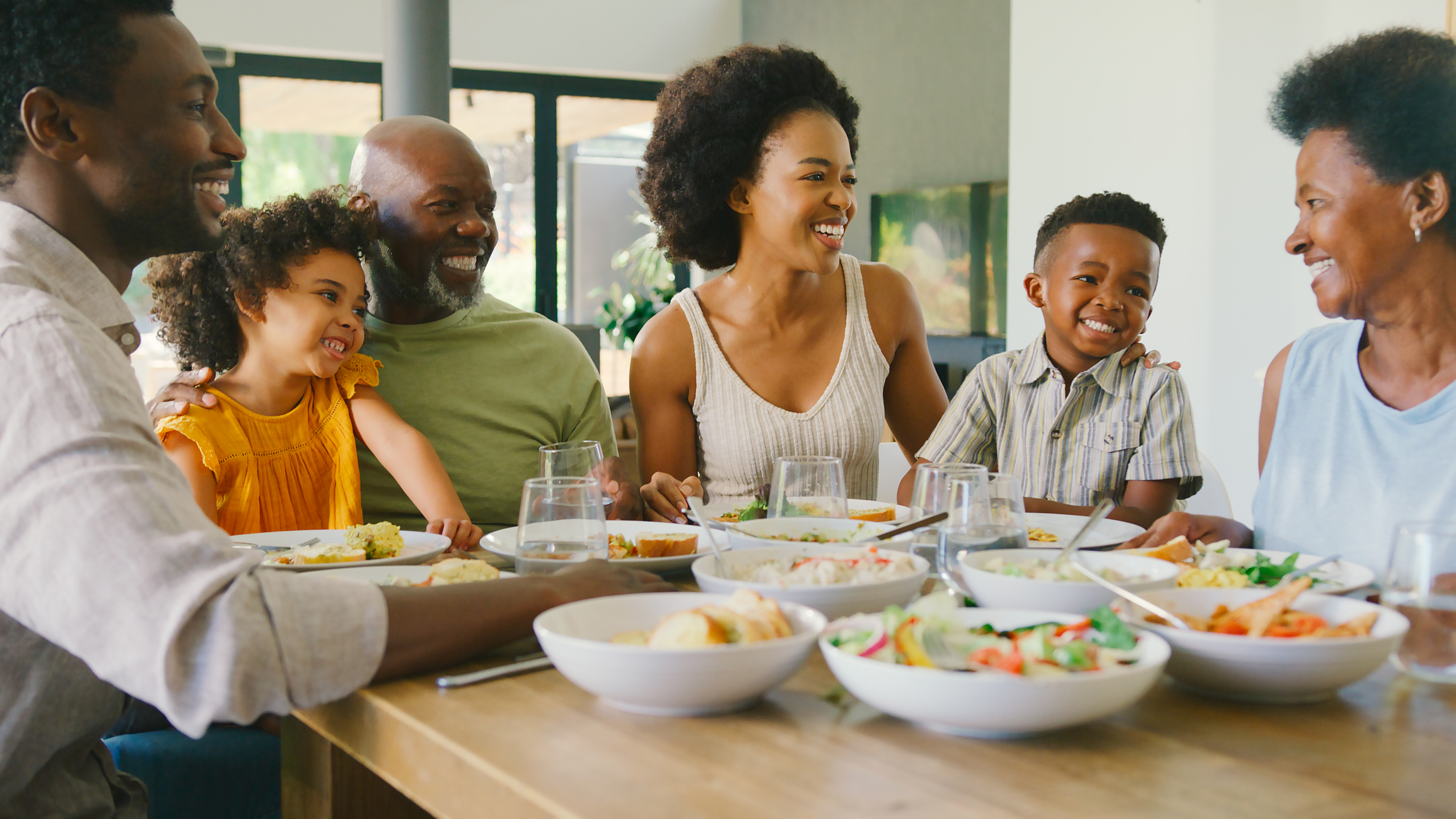
Psychologists and researchers have studied the social power of shared meals for years. According to research published by the American Psychological Association, communal eating is linked to stronger social bonds and increased feelings of trust and cooperation.
Harvard Health Publishing notes that family meals and home cooking are linked with better diet quality, and that sitting down to eat together can support well-being and connection.
Food is not just fuel. It is a ritual. It is a presence. It is time set aside to be together.
Food in Black Communities: Care, Culture, and Continuity
Within African American communities, food has historically served as both sustenance and cultural preservation. The Smithsonian National Museum of African American History and Culture describes foodways as central to African American identity, reflecting resilience, adaptation, and creativity across generations.
From Sunday dinners to holiday gatherings, meals often function as anchors of family life. Recipes are frequently passed down orally, adjusted by feel rather than measurement, and shared with pride.
Cookbooks themselves are considered important cultural records. The Library of Congress highlights community cookbooks as valuable historical documents that reflect local traditions and shared experiences.
When someone hands you a recipe, they are often handing you a piece of family history.
Snacks Count Too
Love does not only live in large holiday meals. It also lives in everyday moments. A parent placing fruit in a lunchbox. A host offering guests a small, sweet treat when they arrive. A friend bringing snacks to a road trip.
Research suggests that sharing food and eating with others supports social connection. A peer-reviewed study on food sharing found it can shape social evaluation of the person who shares, and research summarized by the University of Oxford links more frequent social eating with higher self-reported happiness and life satisfaction.
Offering food signals care. Accepting it signals trust.
In many cultures, declining food can even feel uncomfortable because sharing is so deeply tied to hospitality and respect.
Why This Still Matters Today
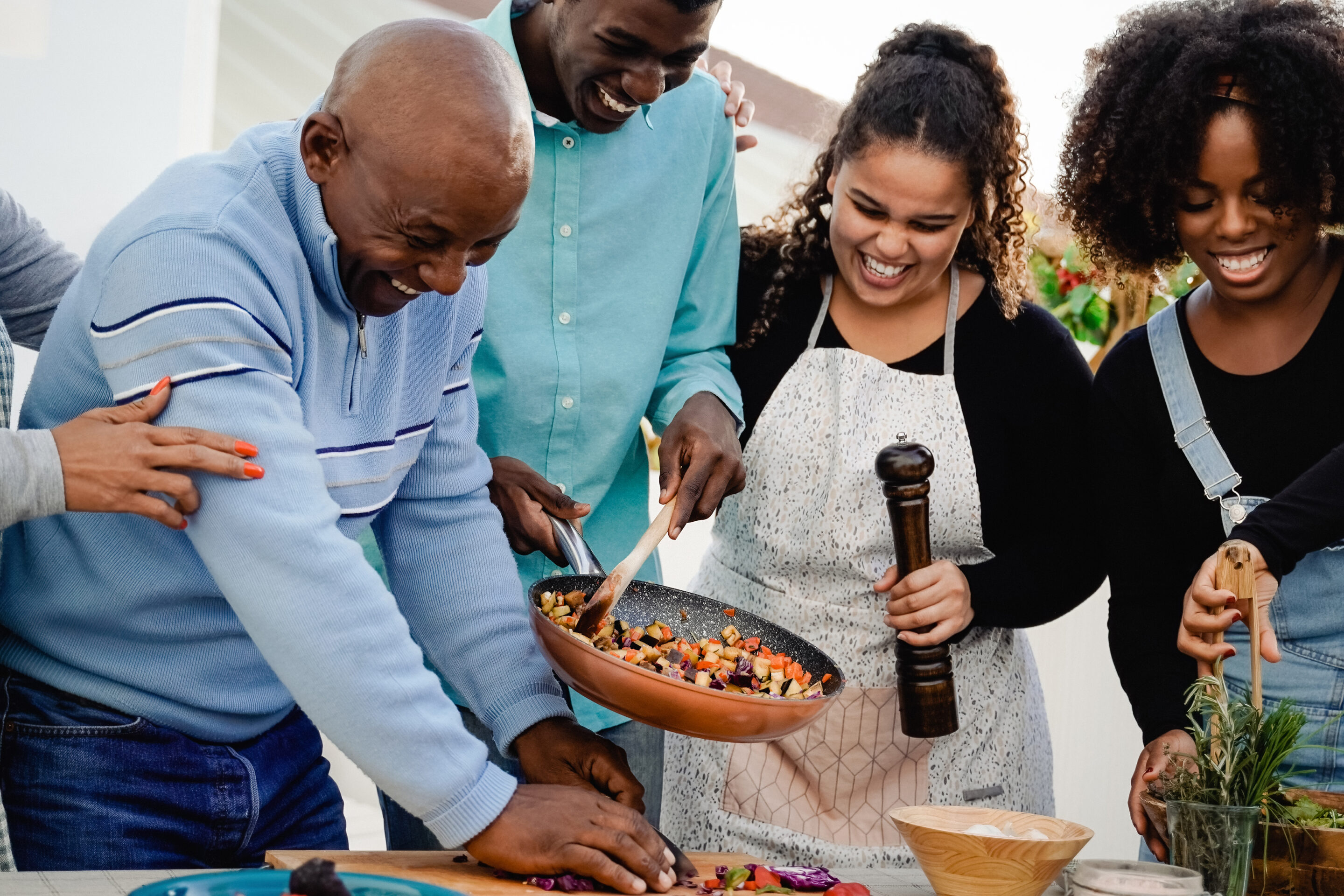
In fast-moving digital lives, food remains one of the simplest ways to show up for each other. It creates pause. It creates presence. It creates shared experience in a world that often feels rushed.
Across Black communities and beyond, food continues to function as a bridge between generations. It connects children to grandparents. It connects neighbors to neighbors. It connects culture to memory.
You may not remember every conversation around the table. But you often remember how it felt to be there.
The Takeaway
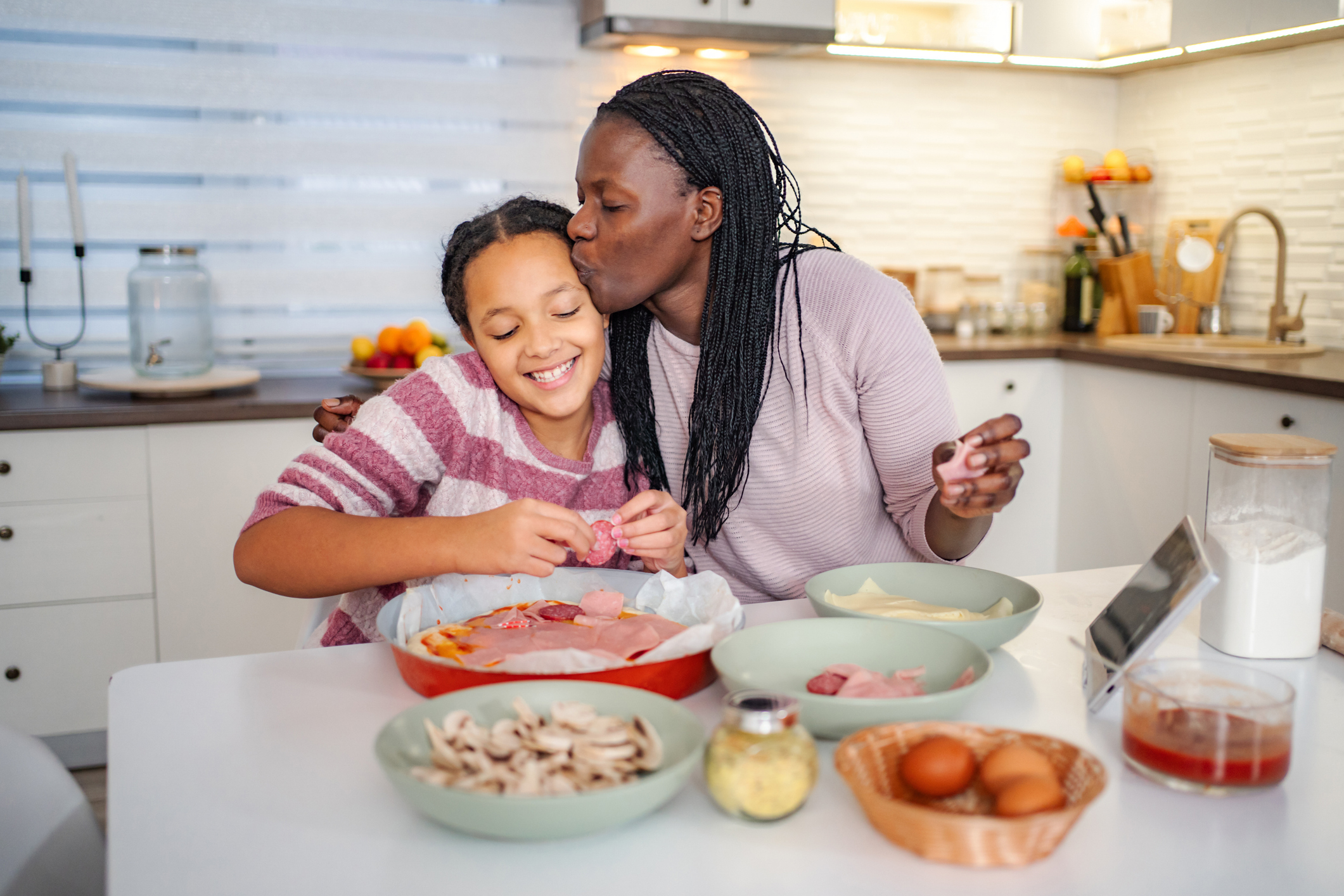
Food as a love language is not just a poetic phrase. It is backed by research and rooted in cultural tradition. Sharing meals, snacks, and recipes strengthens connection, preserves history, and builds community.
Sometimes the most powerful way to say I care is simply to pass the plate.